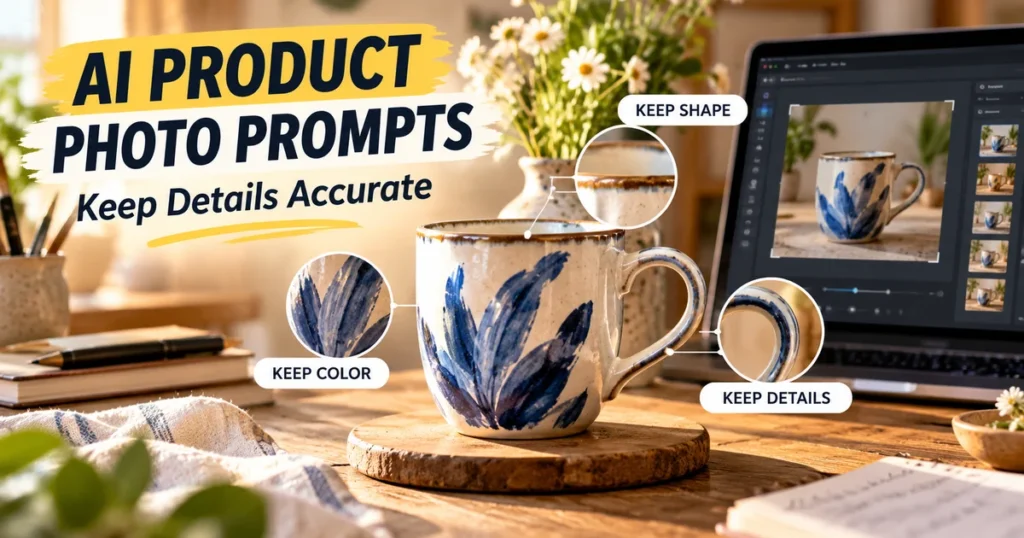
Getting a good image from Nano Banana often comes down to how clearly you describe what you want.
A prompt like “create a cinematic portrait” leaves dozens of decisions up to the model. What does the person look like? Where are they standing? Is it a close-up or full-body shot? Is the light soft, harsh, warm, or cold? What makes it cinematic?
A stronger prompt answers the important questions without turning into a wall of random keywords.
That matters even more in 2026. Nano Banana now refers to Google’s wider family of Gemini image-generation models, including Nano Banana 2 and Nano Banana Pro. The models can work with text prompts, reference images, image editing instructions, different compositions, text inside images, and more advanced visual controls.
Below you’ll find some of the best Nano Banana image prompts to copy, edit, and use for portraits, photography, product ads, social media images, illustrations, posters, travel photography, and experimental artwork.
What Makes a Good Nano Banana Image Prompt?
You don’t need to describe every pixel. You do need to describe the decisions that have the biggest effect on the final image.
Google’s own Nano Banana prompting guidance recommends being specific about the subject, composition, action, location, and visual style. For more controlled results, it also suggests defining details such as camera angle, lighting, aspect ratio, text placement, and the purpose of reference images.
A useful Nano Banana prompt usually covers some combination of these elements:
Subject: Describe the person, object, animal, or scene you want to see. Include clothing, age range, materials, physical details, or other features when they matter.
Composition: Decide how the image should be framed. You might ask for an extreme close-up, chest-up portrait, full-body shot, overhead view, symmetrical composition, or wide establishing shot.
Camera angle: Eye-level feels natural. A low angle can make a subject feel larger or more imposing. A high angle creates a different sense of scale.
Lighting: Instead of simply asking for “beautiful lighting,” describe it. Soft window light, hard midday sunlight, golden-hour backlighting, diffused studio light, neon side lighting, and candlelight produce very different images.
Environment: Tell Nano Banana where the subject is. A plain studio, busy city street, misty mountain trail, luxury hotel, old library, or empty beach will change the entire visual.
Style: Be clear about whether you want photography, watercolor, ink, vintage film, editorial fashion, graphic design, 3D illustration, or another visual treatment.
Color palette: If color matters, define two or three dominant tones instead of listing ten colors.
Mood: Words such as quiet, intimate, tense, playful, elegant, lonely, nostalgic, or energetic can help bring the visual choices together.
Texture and materials: Details such as rough paper, polished chrome, wet asphalt, linen fabric, weathered wood, translucent glass, or heavy watercolor pigment can make an image feel much more deliberate.
Orientation or aspect ratio: Mention whether you need a square social post, vertical portrait, widescreen hero image, or another format. Google specifically recommends stating the desired canvas or aspect ratio when composition matters.
Reference-image instructions: When you upload an image, explain exactly why Nano Banana should use it. For example, one image might guide facial identity while another supplies the clothing or background.
Negative instructions: These are useful when a particular mistake would ruin the image. “No text,” “no additional people,” or “keep the background unchanged” is more useful than adding a giant list of things you don’t want.
The goal isn’t to make every prompt long. It is to remove ambiguity where ambiguity matters.
Best Nano Banana Image Prompts
Here are 15 best Nano Banana image prompts covering a range of popular image styles and practical use cases.
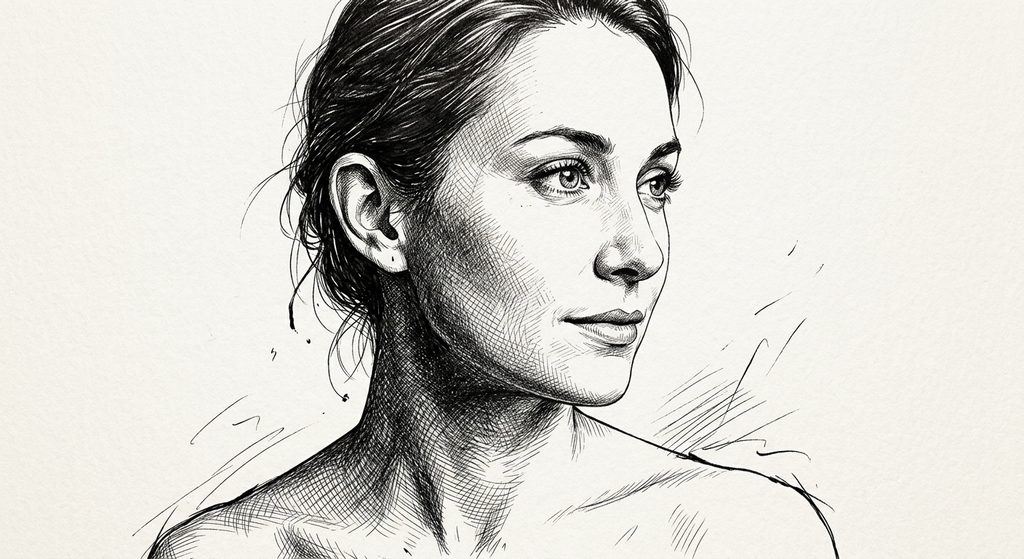
Prompt 1: Hyper-Realistic Ink Portrait
This prompt combines realistic facial structure with traditional black-ink illustration. It works well for editorial artwork, posters, book covers, profile graphics, and dramatic social posts.
Create a highly detailed black-ink portrait of a woman in her early 30s, shown from the shoulders up and facing slightly away from the camera.

Render her facial proportions, eyes, skin structure, hair strands, and expression with realistic anatomical detail, but create the entire portrait using traditional black India ink on textured off-white cotton paper.

Use fine cross-hatching around the cheekbones, neck, and shadows, with delicate line variation in the hair and eyes. Allow a few natural ink bleeds and imperfect brush edges so the artwork feels handmade rather than digitally filtered.

Light the face from the upper left, creating a strong but graceful contrast between illuminated skin and deep ink shadows.

Keep the background nearly empty with only a few loose abstract ink strokes behind the subject.

Elegant, intimate, gallery-quality portrait. No typography, decorative border, or additional objects.
Best for: Editorial artwork, profile images, posters, book covers.
Result:
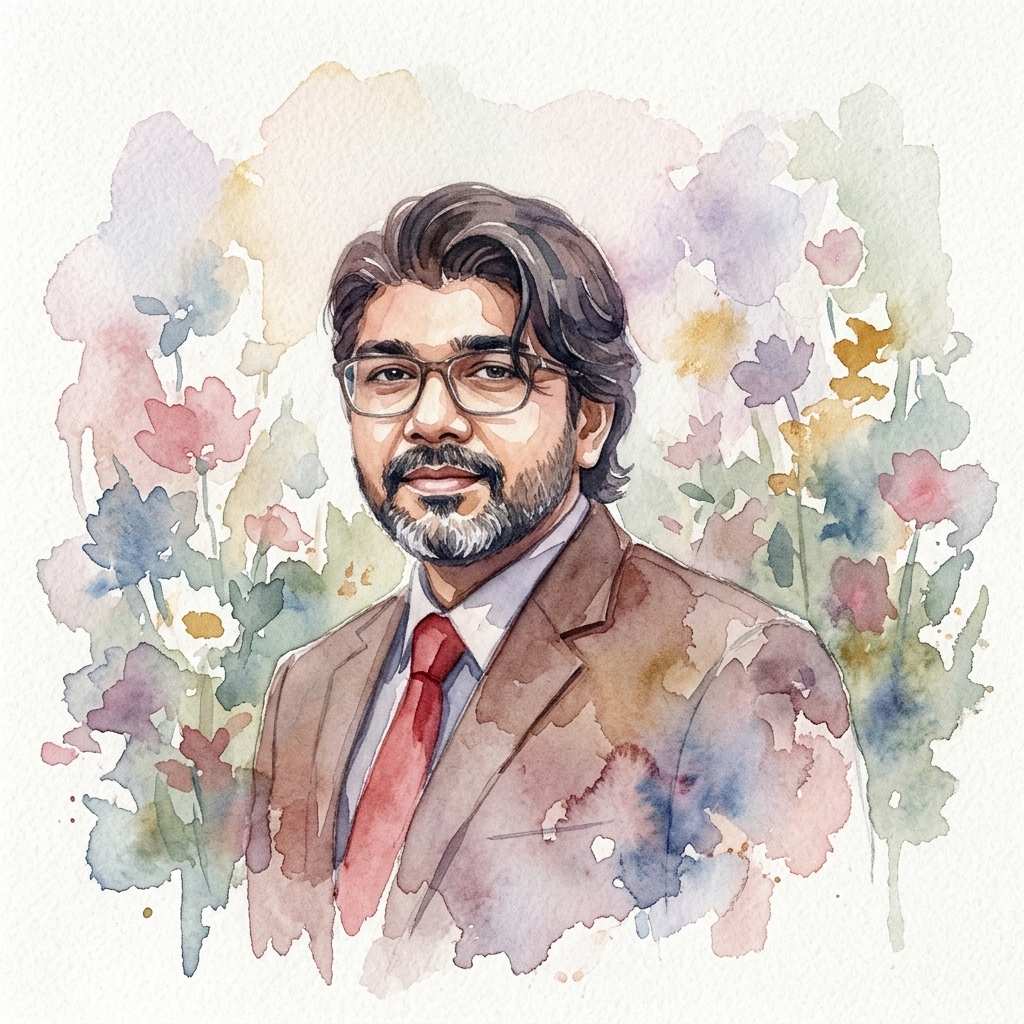
Prompt 2: Romantic Watercolor Portrait From a Reference Photo
Use this when you want to turn an uploaded portrait into something softer and more artistic without changing who the person looks like.
Use the uploaded photograph as the primary identity and appearance reference.

Create a romantic watercolor portrait of the same person while preserving their recognizable facial identity, facial proportions, hairstyle, expression, skin tone, and distinguishing features.

Do not intentionally beautify, reshape, age, or de-age the face.

Paint the subject from the chest upward in a loose but refined watercolor style on cold-pressed watercolor paper. Use soft rose, dusty blue, cream, muted lavender, and small touches of warm gold.

Keep the face relatively detailed while allowing the clothing and background to dissolve gradually into loose washes, pigment blooms, and visible watercolor edges.

Add soft natural window light from one side of the face. The background should suggest a quiet garden filled with indistinct flowers without becoming detailed enough to distract from the portrait.

The final result should feel intimate, handmade, romantic, and suitable for a framed art print.
Quick customization: Replace the garden with a beach, old European street, wedding venue, or another meaningful setting.
Best Nano Banana Image Prompts #2 Result:
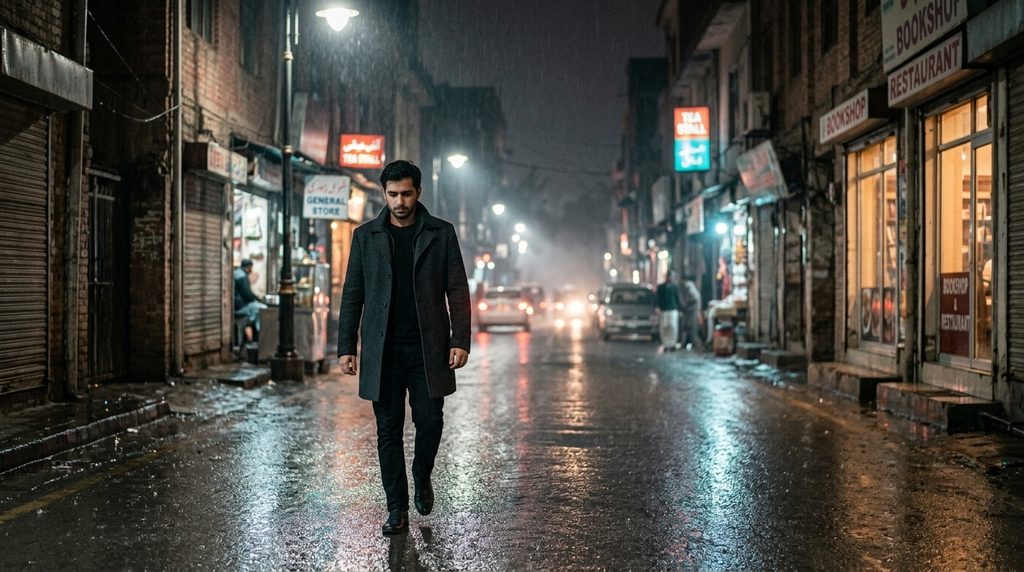
Prompt 3: Cinematic Rainy-Night Street Portrait
This Nano Banana photography prompt is another one in our list of best Nano Banana image prompts, designed to create the kind of frame you might see in a modern crime drama or atmospheric film.
Create a cinematic nighttime photograph of a man in his late 20s walking alone through a narrow city street just after heavy rain.

Frame him in a medium-wide shot at eye level, slightly off-center, with enough of the street visible to establish the environment.

He is wearing a dark charcoal wool coat over simple black clothing. His expression is thoughtful and serious, not posed for the camera.

Wet pavement should reflect shop windows, traffic lights, and muted red and cyan city lights. Add faint mist in the distance and light rain still falling through the streetlights.

Use the visual feel of a full-frame cinema camera with a 50mm lens, shallow depth of field, realistic skin texture, subtle film grain, controlled highlights, deep shadows, and restrained cinematic color grading.

The image should look like a believable still from a professionally shot film rather than a fashion advertisement.

No text, no dramatic fantasy effects, no exaggerated neon, and no crowds near the main subject.

16:9 horizontal composition.
Best for: YouTube thumbnails, cinematic social posts, story concepts, personal branding.
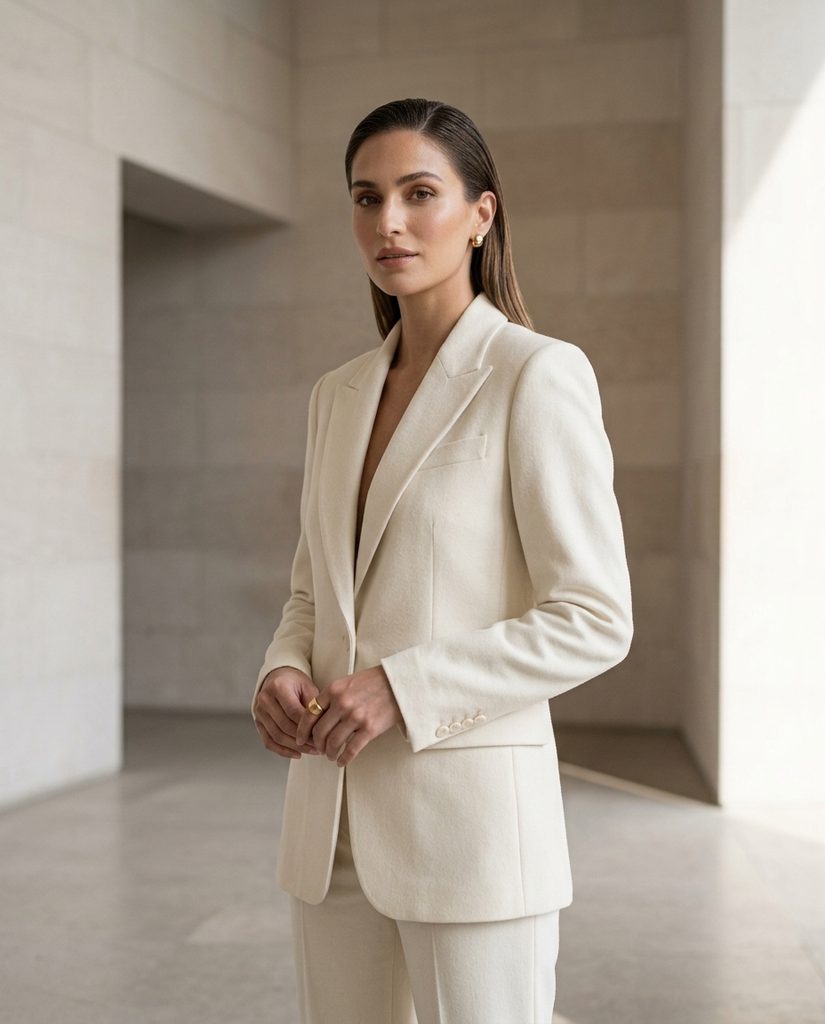
Prompt 4: Luxury Fashion Editorial Portrait
This prompt is built for polished fashion imagery without making the frame look like a basic studio headshot.
Create a luxury fashion editorial photograph of a woman standing inside a minimalist limestone interior.

She is wearing a structured ivory suit with subtle tailoring details, minimal jewelry, and clean contemporary styling.

Compose the image as a three-quarter portrait photographed slightly below eye level. The subject should appear confident but relaxed, looking just past the camera rather than directly into it.

Use a single large soft light source coming from the right, creating gentle sculpting across the face and fabric. Allow soft architectural shadows from the surrounding walls.

Use a restrained palette of ivory, beige, stone, warm gray, and natural skin tones.

Capture realistic fabric texture, skin pores, fine hair strands, natural hands, and believable reflections on jewelry.

The image should resemble a high-end international fashion editorial: refined, spacious, understated, and expensive without looking flashy.

Vertical 4:5 composition with generous negative space around the subject. No text, logos, handbags, or extra people.
Best for: Fashion campaigns, luxury branding, editorial concepts.
Prompt 5: Professional LinkedIn and Social-Media Headshot
A professional headshot doesn’t need to look stiff. This best Nano Banana image prompts aims for a natural photo that could realistically have been taken by a good portrait photographer.
Use the uploaded photograph as the primary identity reference.

Create a professional chest-up profile photograph of the same person suitable for LinkedIn, a company website, speaker profile, and other professional social-media accounts.

Preserve the subject's recognizable facial identity, natural facial proportions, hairstyle, skin tone, and distinguishing features. Do not intentionally reshape or beautify the face.

Dress the subject in a well-fitted dark navy blazer over a simple light shirt with no visible branding.

Position the camera at eye level with the subject's shoulders turned slightly away while the face looks naturally toward the camera.

Use a realistic 85mm portrait-photography feel with soft window-style lighting, natural skin texture, sharp eyes, gentle depth of field, and subtle catchlights.

Place the subject in a modern office environment, but keep the background softly blurred and neutral so it does not compete with the face.

Expression: approachable, confident, calm, with a slight natural smile.

Avoid plastic-looking skin, extreme teeth whitening, exaggerated jaw definition, excessive background blur, or obvious beauty retouching.

Square composition with comfortable space around the head and shoulders.
Best for: LinkedIn, author bios, company pages, speaker profiles.

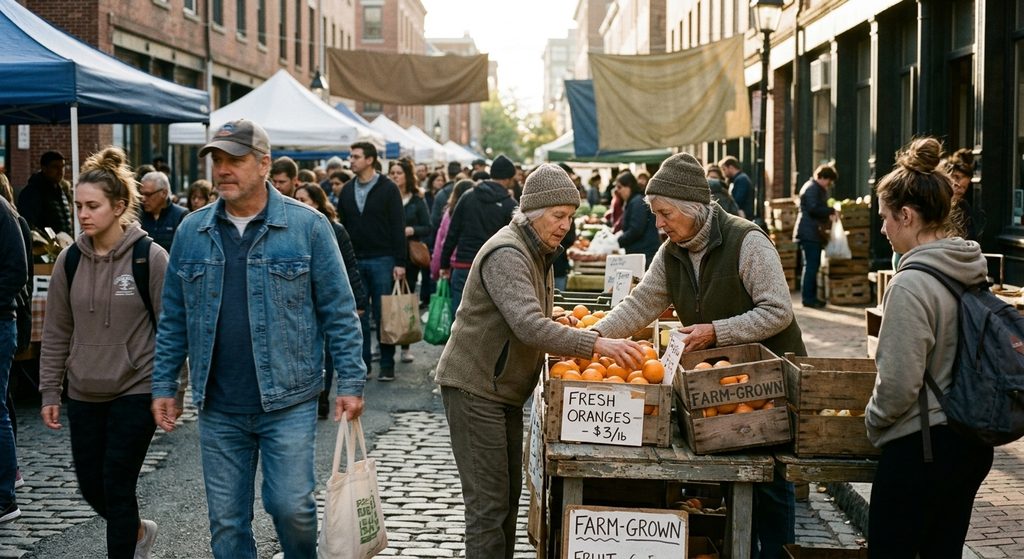
Prompt 6: Authentic Street Photography
AI-generated street photography often looks too staged. This prompt deliberately asks for small imperfections that make the scene more believable.
Create a candid documentary-style street photograph taken in a crowded outdoor market during late afternoon.

The main subject is an elderly fruit seller arranging oranges at a weathered wooden stall while two customers pass through the foreground without looking at the camera.

Photograph the scene from slightly below eye level as though the photographer noticed the moment while walking past.

Use natural late-afternoon sunlight entering between buildings, creating patches of bright light and deep shadow across the market.

Include worn signs, stacked produce boxes, hanging fabric, uneven pavement, and ordinary background activity, but keep the fruit seller as the clear visual focus.

Use a 35mm documentary-photography feel with moderate depth of field, subtle motion blur on one passing pedestrian, natural color, slightly imperfect framing, realistic skin texture, and fine film grain.

Do not make the market unusually clean or picturesque. Avoid staged poses, symmetrical composition, artificial smiles, or cinematic fog.

3:2 horizontal photograph.
Best for: Documentary concepts, editorial blogs, storytelling, travel content.
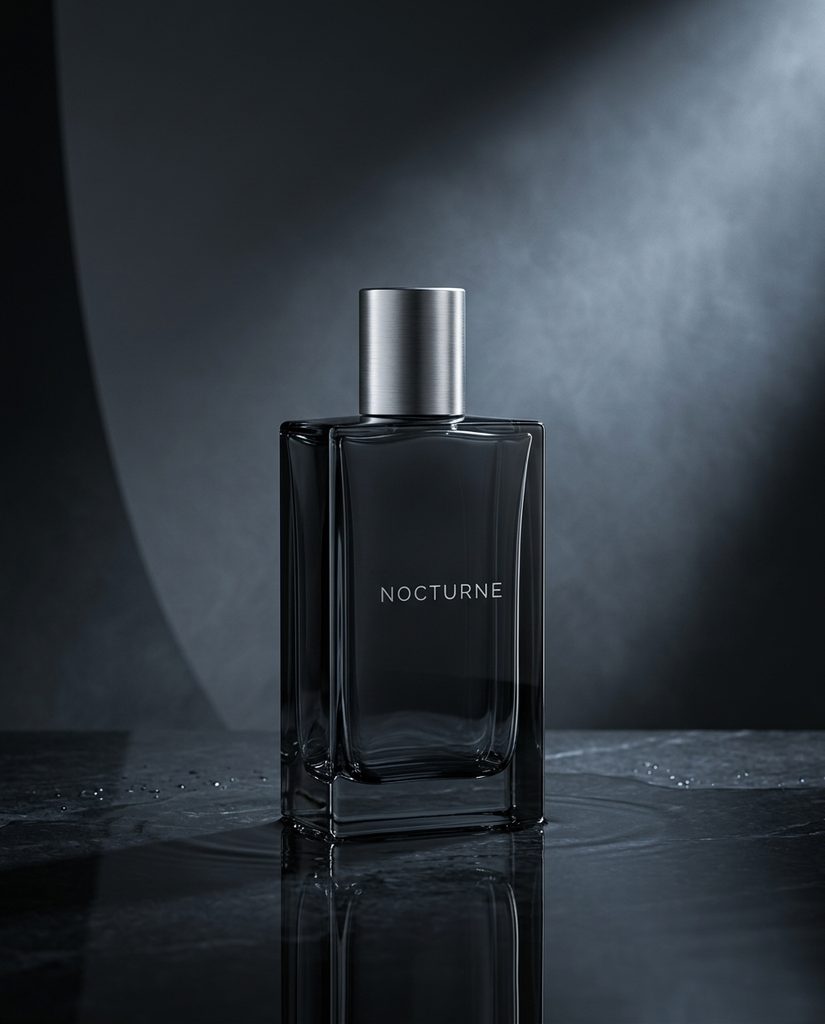
Prompt 7: Premium Product Advertisement
This example is useful for cosmetics, beverages, electronics, accessories, and similar commercial product shots.
Create a premium studio advertisement for a fictional fragrance called "NOCTURNE".

The product is a rectangular smoked-glass perfume bottle with a brushed silver cap. The word "NOCTURNE" should appear once on the front of the bottle in clean, small uppercase lettering.

Place the bottle upright on a dark polished stone surface. Add a thin layer of water across the stone so the bottle produces a subtle reflection.

Behind the product, create a curved charcoal-gray studio backdrop with a controlled beam of cool light passing diagonally through faint atmospheric mist.

Use strong edge lighting to reveal the shape and transparency of the glass while keeping the overall mood dark and sophisticated.

Show realistic glass refraction, tiny water droplets, believable shadows, metal reflections, and premium product-photography detail.

Leave negative space around the bottle. The bottle must remain the clear focal point.

No additional text, flowers, fruit, hands, people, or decorative objects.

Vertical 4:5 advertising composition.
Quick customization: Replace the fragrance bottle with a watch, skincare product, beverage can, headphones, or another product.
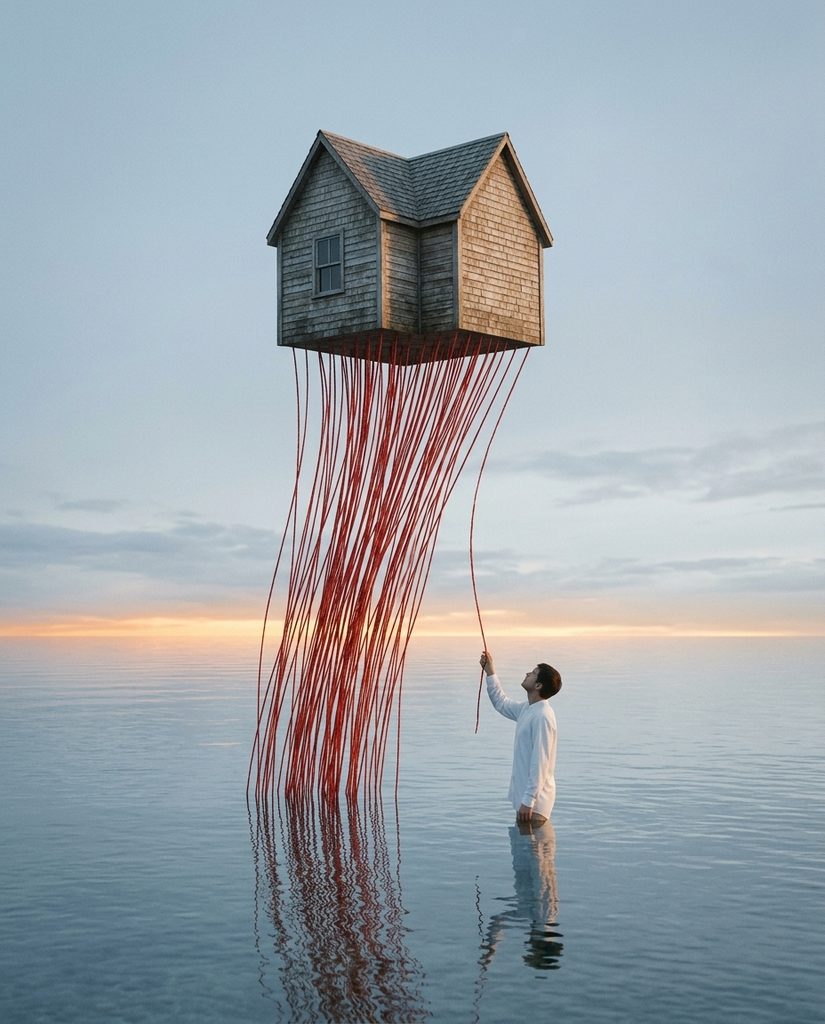
Prompt 8: Surreal Conceptual Artwork
For surreal images, describing the relationship between strange elements is usually more useful than simply asking for “surreal art.”
Create a surreal conceptual artwork showing a small wooden house floating several meters above an endless calm ocean at dawn.

Instead of a foundation, hundreds of long red threads extend from underneath the house and disappear beneath the surface of the water.

A single person in a white shirt stands knee-deep in the ocean directly below the house, holding one loose red thread in their hand and looking upward.

The sky is pale blue-gray with a thin line of warm sunrise near the horizon. The ocean should be almost perfectly still, producing a soft reflection of the person and floating house.

Use realistic materials and natural lighting even though the situation is impossible. The wooden walls, water, clothing, threads, and clouds should all have convincing physical texture.

Keep the composition minimal and spacious. Avoid fantasy creatures, floating islands, stars, excessive fog, or decorative objects.

The mood should suggest memory, attachment, and distance without using any words or typography.

4:5 vertical composition.
Best for: Album artwork, conceptual posts, book covers, creative campaigns.
Prompt 9: Vintage 1970s Film Photograph
This is one of my favorite best Nano Banana image prompts. The details that make an image feel vintage are often more important than simply adding the words “retro” or “film.”
Create a photograph that feels like a genuine color snapshot taken in 1977.

A young couple is sitting at a small roadside diner booth beside a large window. One person is drinking coffee while the other looks outside toward the parking lot.

The diner has faded mustard-yellow seating, dark wood tables, chrome trim, handwritten menu cards, and slightly worn surfaces.

Use soft overcast daylight through the window mixed with warm indoor tungsten light.

Frame the photograph casually from the opposite side of the booth as if taken by a friend.

Use the visual character of consumer 35mm color film: moderate grain, slightly soft focus, warm skin tones, restrained contrast, subtle color shifts, mildly faded reds and yellows, and small exposure imperfections.

Clothing, hairstyles, tableware, furniture, and visible objects should fit the late 1970s setting.

Do not include modern smartphones, contemporary cars, LED lighting, modern logos, or obviously modern clothing.

3:2 horizontal format.
Best for: Nostalgic campaigns, storytelling, retro social content.
Prompt 10: Mountain Travel Portrait
This reference-image prompt keeps the person as the focus while making the location feel significant.
Use the uploaded portrait as the primary identity reference for the traveler.

Preserve their recognizable facial identity, facial proportions, hairstyle, skin tone, and distinguishing features.

Create a realistic environmental travel portrait of the person standing on a rocky mountain trail shortly after sunrise.

Frame the subject from approximately the knees upward using a slightly wide photographic perspective so the surrounding landscape remains important.

Behind them, show several layers of rugged mountains fading gradually into atmospheric haze. Low morning clouds should sit between some of the distant peaks.

The subject is wearing practical neutral-colored hiking clothing and a small backpack. Their posture should feel natural, as though they briefly stopped during the hike rather than posing for a fashion shoot.

Use warm sunrise light striking one side of the face with cooler ambient light in the shadows.

Retain realistic skin, fabric, rocks, distant vegetation, and atmospheric depth.

The final photograph should feel adventurous, calm, and believable rather than overly dramatic.

Vertical 4:5 composition. No text or other visible hikers near the subject.
Best for: Travel blogs, Instagram, outdoor brands, personal photography.
Prompt 11: Minimalist Graphic Poster
Nano Banana can also be useful when you need a controlled composition rather than a realistic photograph.
Design a minimalist vertical poster about creative focus.

Place one small red chair in the exact center of a large warm-white background.

Above the chair, display the words "DO ONE THING" in bold black uppercase sans-serif typography. Keep the words on two lines with generous letter spacing.

The chair should be shown from a slight three-quarter angle and cast one clean soft-gray shadow toward the lower right.

Use only four colors across the entire poster: warm white, black, muted red, and soft gray.

Keep approximately 60 percent of the poster as empty negative space.

The visual hierarchy should be immediate: headline first, red chair second.

Clean Swiss-inspired grid, precise alignment, flat graphic composition, no decorative border, no icons, no additional copy, and no texture effects.

2:3 vertical poster.
Best for: Posters, quote graphics, advertising concepts, social-media design.
Prompt 12: Dramatic Black-and-White Portrait
This is prompt designed to produce a strong monochrome portrait without relying on vague instructions such as “moody.” makes it place amount the best Nano Banana image prompts.
Create a dramatic black-and-white close-up portrait of a middle-aged man with a weathered face and short hair.

Frame the photograph tightly from the upper chest to just above the head.

Place the subject against a completely dark studio background and turn his face approximately 30 degrees away from the camera while his eyes look back toward the lens.

Use one hard side light positioned high to the left. Illuminate one eye, part of the forehead, cheekbone, and edge of the nose while allowing the opposite side of the face to fall gradually into deep shadow.

Preserve pores, wrinkles, beard texture, individual hair strands, and natural imperfections.

Use deep blacks, bright but controlled highlights, rich middle-gray tones, crisp eye detail, and subtle fine-grain monochrome film texture.

The photograph should feel serious and intimate rather than aggressive.

No rim light, smoke, props, jewelry, text, or visible background detail.

4:5 vertical portrait.
Best for: Editorial portraits, author photography, dramatic profile images.
Prompt 13: Café Lifestyle Image for Instagram
This prompt is useful when you want a polished social photo that still feels spontaneous.
Create a natural lifestyle photograph of a young woman reading a paperback book alone at a small corner table inside an independent café.

Photograph the scene from a nearby table at approximately eye level, as though the moment was captured naturally.

She is wearing a relaxed cream sweater with dark trousers. One hand holds the book while the other rests beside a ceramic cup of coffee.

Soft morning sunlight enters through a large window beside her, illuminating floating dust particles and creating gentle shadows across the wooden table.

Include small believable details such as a folded coat on the adjacent chair, condensation on a glass of water, slightly scratched wooden furniture, and people softly blurred farther inside the café.

Use natural warm-neutral colors, realistic skin texture, shallow but not extreme depth of field, and a subtle 35mm photographic feel.

Do not make the subject look directly at the camera. Avoid perfect symmetry, excessive décor, staged smiling, or visible brand logos.

Vertical 4:5 composition suitable for Instagram.
Prompt 14: Sci-Fi Product Concept
This example shows how to describe futuristic design without filling the prompt with generic “cyberpunk” terminology.
Create a photorealistic industrial-design concept image of a compact personal communication device from the year 2045.

The device should be approximately the size of a credit card but slightly thicker, with a matte ceramic body, rounded edges, one narrow transparent glass strip, and a small physical control wheel along one side.

Avoid designing it like a modern smartphone. There should be no large rectangular touchscreen.

Place the device on a brushed aluminum workbench inside a clean industrial design studio.

Show a few blurred prototype components and precision tools in the far background, but keep the main device isolated and easy to study.

Use soft overhead studio lighting combined with one narrow side light that reveals the ceramic texture and glass edge.

Photograph from a slightly elevated three-quarter angle using a macro product-photography feel.

Palette: graphite gray, warm white, brushed silver, with one small amber light on the device.

Make the design functional, restrained, and physically manufacturable rather than fantastical.

16:9 horizontal image. No floating holograms, human hands, text, logos, or neon city backgrounds.
Best for: Product concepts, technology blogs, startup presentations, speculative design.
Prompt 15: Food Photography for a Recipe or Restaurant
Good food prompts should describe light, plating, texture, and camera position instead of simply asking for “delicious food photography.”
Create a realistic editorial food photograph of fresh handmade tagliatelle pasta with roasted cherry tomatoes, basil, olive oil, Parmesan, and cracked black pepper.

Serve the pasta in a shallow handmade off-white ceramic bowl placed on a slightly worn dark wooden table.

Photograph the dish from approximately 45 degrees above table level so both the pasta and the depth of the bowl remain visible.

Use soft natural window light entering from the left, with gentle shadow falloff on the right.

Show realistic pasta texture, small pools of olive oil, freshly grated Parmesan, slightly blistered tomato skins, torn basil leaves, and a small amount of steam.

Keep the styling imperfect enough to feel freshly served rather than arranged with tweezers.

Include a folded linen napkin and an old stainless-steel fork near the bowl, but no other dishes.

Use warm natural color, moderate depth of field, subtle grain, and the visual feel of editorial restaurant photography.

3:2 horizontal composition. No text, hands, excessive garnish, or artificially glossy food.
Create a realistic editorial food photograph of fresh handmade tagliatelle pasta with roasted cherry tomatoes, basil, olive oil, Parmesan, and cracked black pepper.
Serve the pasta in a shallow handmade off-white ceramic bowl placed on a slightly worn dark wooden table.
Photograph the dish from approximately 45 degrees above table level so both the pasta and the depth of the bowl remain visible.
Use soft natural window light entering from the left, with gentle shadow falloff on the right.
Show realistic pasta texture, small pools of olive oil, freshly grated Parmesan, slightly blistered tomato skins, torn basil leaves, and a small amount of steam.
Keep the styling imperfect enough to feel freshly served rather than arranged with tweezers.
Include a folded linen napkin and an old stainless-steel fork near the bowl, but no other dishes.
Use warm natural color, moderate depth of field, subtle grain, and the visual feel of editorial restaurant photography.
3:2 horizontal composition. No text, hands, excessive garnish, or artificially glossy food.Best for: Recipe blogs, restaurant websites, menus, Pinterest.
A Simple Nano Banana Prompt Formula
If you’re writing your own Nano Banana prompts, start with the most important information rather than dumping visual keywords into the prompt.
A practical structure is:
Create a [type of image] showing [main subject].

[Describe appearance, clothing, action, or important subject details.]

Compose the image as [framing and camera angle].

Set the scene in [location/background].

Use [lighting].

The visual style should feel [style, mood, photographic or artistic characteristics].

Use [important colors, textures, materials, or camera characteristics].

Format the image as [orientation/aspect ratio].

Avoid [specific unwanted elements].
You don’t have to fill in every line.
For a simple illustration, subject and style may be enough. For an advertising image, portrait, product shot, or complicated edit, tighter instructions usually give you more control.
How to Get Better Results From Nano Banana Prompts
One useful change in mindset is to stop treating image generation like a search engine.
You aren’t searching for an existing picture. You’re directing the creation of a new one.
Instead of writing:
Cool luxury perfume ad, cinematic, professional, beautiful, high qualitydescribe the photograph:
Create a studio advertisement for a rectangular smoked-glass perfume bottle standing on wet black stone. Light the bottle from behind with a narrow white strip light so the edges of the glass glow while the front remains dark. Use a charcoal background, realistic reflections, fine water droplets, and a vertical 4:5 composition.The second version gives Nano Banana actual visual decisions to work with.
It also helps to change one variable at a time when refining an image. If you like the composition but dislike the lighting, ask for a lighting change instead of rewriting the entire prompt.
Nano Banana supports conversational image editing, so you can continue refining an existing result with direct instructions rather than regenerating everything from scratch. Google’s examples include targeted requests such as changing one object, shifting focus, altering time of day, or preserving one part of an image while modifying another.
For example:
Keep the subject, pose, clothing, camera position, and background exactly as they are. Change only the lighting to soft golden-hour sunlight entering from the left.That is often more controllable than submitting another completely different prompt.
How to Use Reference Images With Nano Banana
Reference images become much more useful when you tell the model what each image is supposed to control.
If you’re uploading one portrait, you could say:
Use the uploaded photograph as the primary identity reference. Preserve the subject's recognizable facial identity, facial proportions, hairstyle, skin tone, and distinguishing features while changing the clothing and environment.If you’re using several references, assign them separate jobs:
Use Image 1 as the identity and facial reference.

Use Image 2 only as the clothing reference.

Use Image 3 as the reference for the room's interior design and color palette.

Create one new realistic photograph combining these elements naturally.
This approach is more precise than simply uploading several images and asking Nano Banana to “combine them.”
Google’s own prompting guidance similarly recommends stating the role each reference image should play.
Should You Use Negative Prompts With Nano Banana?
Sometimes, but keep them focused.
You usually don’t need a giant negative prompt containing dozens of unwanted features.
Instead, identify the mistakes that would materially damage the result.
For example:
No visible text, logos, additional people, fantasy effects, or exaggerated background blur.For image editing, even more precise instructions can help:
Replace the blue jacket with a dark brown suede jacket. Keep the person's face, body position, hands, background, camera angle, and lighting unchanged.Clear restrictions are usually more useful than a long collection of generic negative keywords.
Frequently Asked Questions About Nano Banana Prompts
What is Nano Banana?
Nano Banana is Google’s name for its Gemini native image-generation family. As of 2026, the family includes Nano Banana 2, Nano Banana 2 Lite, Nano Banana Pro, and the original Nano Banana model. Google describes Nano Banana 2 as its general-purpose option, while Nano Banana Pro targets more demanding professional image work.
What is the best Nano Banana prompt?
There isn’t one universal best prompt. The best Nano Banana prompt is the one that clearly describes the image you need.
For most images, start with the subject, composition, environment, lighting, and visual style. Add camera details, colors, textures, aspect ratio, or negative instructions only when they affect the result.
Do longer Nano Banana prompts create better images?
Not automatically.
A long prompt filled with unnecessary adjectives can be less useful than a short prompt with precise visual instructions.
“Beautiful cinematic professional portrait, stunning, amazing, ultra detailed” contains less usable direction than “chest-up portrait photographed at eye level beside a north-facing window with soft side lighting.”
Specificity matters more than word count.
Can Nano Banana use reference images?
Yes. Nano Banana models can work with images as inputs, allowing you to generate new compositions or edit existing images. For stronger results, explain whether a reference should control identity, pose, clothing, style, product appearance, or another part of the image.
Can Nano Banana generate text inside images?
Current Nano Banana models can generate text as part of an image, and Google’s newer models place greater emphasis on improved text rendering. However, Google still notes that small text, precise spelling, data-heavy visuals, and some complex generations can contain errors, so important text should be checked before publishing.
What should I include in a realistic Nano Banana image prompt?
For realistic images, describe the subject, framing, camera position, lighting direction, environment, depth of field, physical textures, and any photographic characteristics that matter.
Avoid relying only on phrases such as “photorealistic,” “8K,” or “ultra realistic.” Those terms say much less about the actual photograph than information about light, composition, subject, and environment.
Final Thoughts on the Best Nano Banana Image Prompts
The best Nano Banana image prompts aren’t necessarily the longest. They’re the ones that make the important visual decisions clear.
Start with what the image is actually about. Then control the composition, lighting, environment, style, color, texture, and format where necessary.
For portraits, be precise about identity and framing. For product images, focus on materials, lighting, surfaces, and placement. For cinematic photography, describe the scene as a photographer or cinematographer would. And when you’re editing an existing image, tell Nano Banana exactly what should change and what should stay untouched.
Use the Nano Banana prompts above as starting points rather than fixed recipes. Change the subject, setting, clothes, palette, camera position, or mood and you can turn a single prompt into dozens of useful variations.
💡 Take Your Growth to the Next Level: While these Nano Banana prompts are perfect for creating stunning visual assets, pair them with the right strategy to maximize your revenue. Head over to our Marketing & Sales AI Hub to discover step-by-step guides on embedding these AI-generated graphics into high-converting sales funnels, high-performing social campaigns, and automated customer journeys that turn casual viewers into loyal clients.