
Kitchen countertop alternatives are in the spotlight after an October 26, 2026 House Beautiful report described renewed designer interest in natural stone and porcelain. The change does not mean engineered quartz has suddenly failed. It means homeowners are looking more closely at pattern, texture and how a surface will age. If you are remodeling a kitchen, the smart move is to compare materials against your budget and daily routine, not chase a headline.
This guide explains marble, quartzite, granite, soapstone and porcelain, including care, installation questions, safety and common mistakes. It also offers a practical way to decide whether keeping or choosing engineered quartz makes more sense.
For the recent design discussion, see House Beautiful’s October 26 countertop report. For wider renovation planning, compare the 2026 Houzz renovation trends study.
In this guide
- Why countertop choices are changing
- The five countertop materials worth comparing
- Marble for expressive veining
- Quartzite for natural patterns and a firmer surface
- Granite for a broad range of looks
- Soapstone for depth and a lived-in finish
- Porcelain slabs for pattern with simpler everyday care
- Is engineered quartz still a sensible choice?
- A quick countertop comparison
- How to choose a countertop for your kitchen
- The renovation sequence that avoids expensive mistakes
- Budget for the complete installation, not just the slab
- Where the newest look works best
- Consider safety, accessibility and future upkeep
- Common renovation mistakes
- Questions to ask the fabricator
- Frequently asked questions
- The bottom line
Why countertop choices are changing
The renewed interest in kitchen countertop alternatives is not proof that engineered quartz has stopped working. It reflects a shift in taste toward surfaces with character, visible variation and a more personal feel. A House Beautiful report published October 26, 2026 highlighted designers choosing natural stone and porcelain instead of relying on quartz by default. For homeowners, the more useful question is which material suits their cooking habits, maintenance tolerance and renovation budget.
The trend also overlaps with practical concerns. A bold stone can anchor a simple kitchen, but a dramatic slab is not automatically durable or easy to maintain. Porcelain can deliver a striking look, yet its edges and installation need careful planning. Quartz remains a reasonable choice in many homes. This guide compares the options without treating a passing style as a universal rule.
The five countertop materials worth comparing
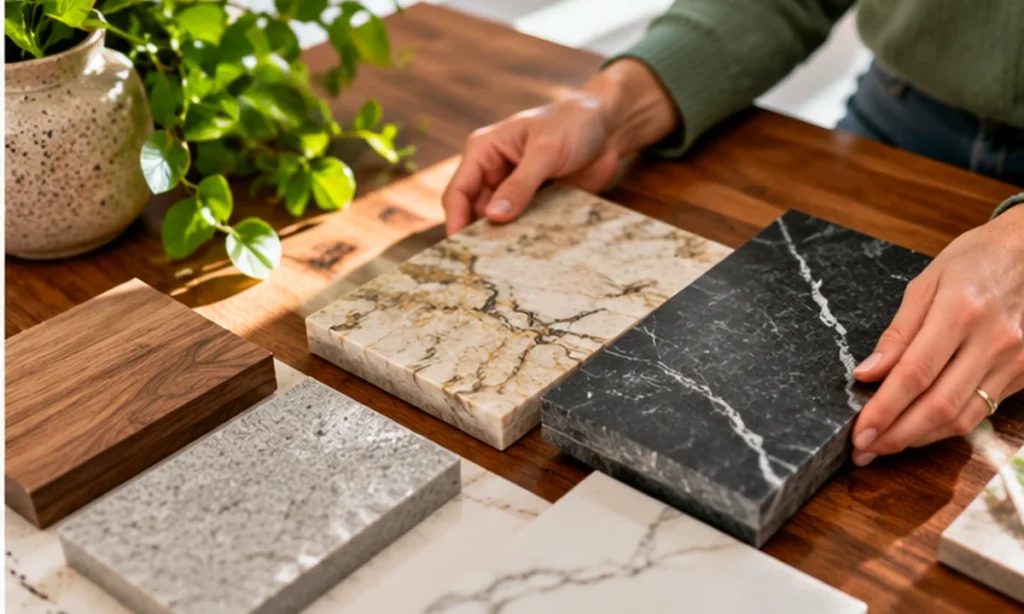
Begin with the material rather than a color sample alone. Marble, quartzite, granite, soapstone and large-format porcelain are all being considered as alternatives to engineered quartz. They differ in porosity, finish, heat behavior, repair possibilities and availability. Even two slabs sold under the same stone name can look and perform differently. Ask for the exact product specifications, not a general promise from a showroom.
Choose three candidates before requesting estimates. Look at each one in daylight and under your planned kitchen lighting. Bring a cabinet door, backsplash sample and flooring photo. A surface that looks crisp against white showroom cabinets may feel unexpectedly busy beside patterned flooring at home.
For an efficient shortlist of kitchen countertop alternatives, write down the two problems your current surface creates. It might stain too easily, show every crumb, or overwhelm a small kitchen. Use those problems to judge each material.
Marble for expressive veining
Marble has long appealed to homeowners who want a soft, organic appearance. White marble with gray movement can suit light kitchens, while richly colored stones can become the main visual feature. The veins are not printed, so each selected slab has its own pattern. That individuality is part of its appeal and one reason to inspect the actual pieces reserved for your project.
The tradeoff is maintenance. Many marbles can etch when acidic foods contact the surface, and some can absorb stains. Sealing may help with certain stains but does not prevent every mark or etch. If you cook with citrus, vinegar or tomato sauces every day, decide whether you can accept a patina before ordering. A honed finish can make ordinary wear feel less conspicuous but is not damage-proof.
Quartzite for natural patterns and a firmer surface
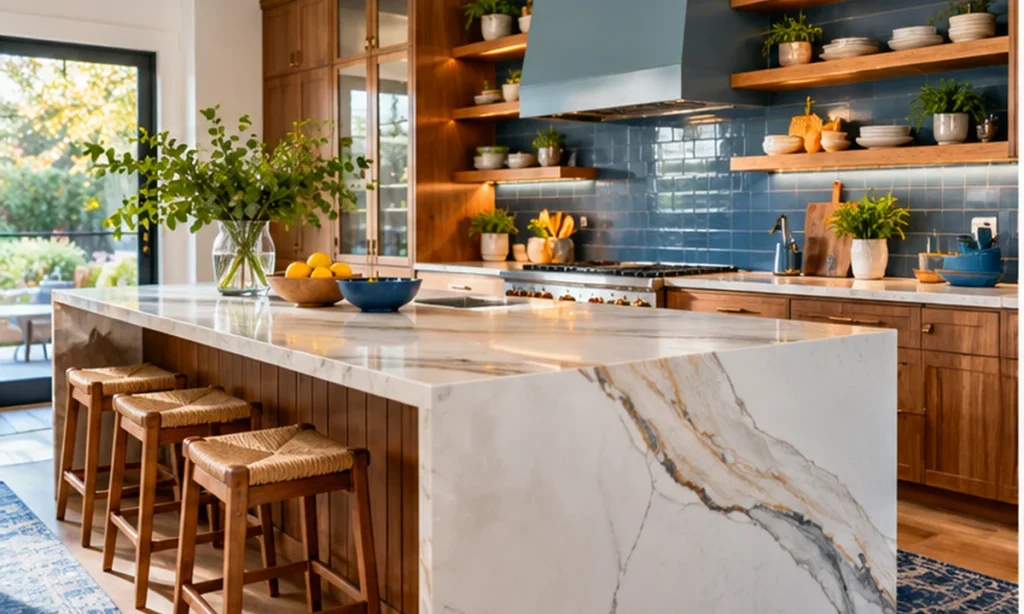
Quartzite is a natural metamorphic stone that can combine dramatic veins with a surface often harder than marble. It is not the same material as engineered quartz. The two names are easy to confuse, so insist on a written material description and ask your fabricator about the stone being offered. Some slabs marketed with familiar names may behave differently from what a buyer expects.
Quartzite still needs thoughtful care. Depending on the specific stone, absorption and sealing needs vary. The pattern may contain fissures or mineral features that are normal for that slab. Ask how seams, cutouts and edge profiles will affect the design. For many remodels, selecting the right slab and an experienced fabricator matters more than choosing a fashionable label.
Among kitchen countertop alternatives, quartzite is worth seeing as a complete slab. A small showroom tile may hide a sweeping band of color or a patch you would not want around the sink.
Granite for a broad range of looks
Granite is often overlooked in trend discussions because many people picture the speckled counters common in older renovations. Today, available granites include quiet charcoal, warm cream and highly patterned varieties. A restrained granite may work well with painted cabinetry, while a stronger design can complement solid wood. The actual color and movement depend on the quarry and slab.
Granite is generally valued for strength and heat tolerance, but individual products and finishes have different care needs. Do not assume every granite is stain-proof or that thermal shock is impossible. Use trivets, follow the supplier’s cleaning instructions and ask about sealing. If you want a natural stone without marble’s particular sensitivity to acids, compare several granites in person.
Soapstone for depth and a lived-in finish
Soapstone appeals to people who prefer muted, tactile counters over bright veining. Its dark gray or greenish tones can pair beautifully with oak, brass and saturated cabinet colors. The surface often develops a softer, more lived-in appearance with use. Some homeowners apply mineral oil or wax to deepen the color, while others allow the stone to age naturally.
Soapstone is relatively soft and can scratch, even though it resists many common household acids. Ask your supplier how scratches are handled and request a sample to test ordinary kitchen tasks. Do not choose it solely because a photograph looks timeless. Its evolving surface is part of the character, and that should feel like a benefit to you.
When comparing kitchen countertop alternatives for a family home, consider whether scratches will bother you. Soapstone offers attractive depth, but its willingness to show ordinary wear is a personal preference rather than a defect.
Porcelain slabs for pattern with simpler everyday care
Large-format porcelain surfaces can imitate stone movement or offer cleaner contemporary patterns. They are made through a manufacturing process rather than quarried as large natural slabs, which can make colors and repeatability easier to plan. Many porcelain products offer strong stain and scratch resistance, though claims vary with product, finish and thickness.
The most important questions involve edges, chips, seams and installation. A porcelain slab may need specialized handling and fabrication. Ask whether a chosen edge profile exposes a different body color, how damaged edges are repaired and what warranty covers. A beautiful rendering is not a substitute for viewing a full-size sample and examining a real installed edge.
Is engineered quartz still a sensible choice?
Yes. Engineered quartz offers consistent patterns and can be convenient for households that want fewer maintenance variables. In many installations it remains an appropriate option. Its resin content can limit direct heat tolerance, and stain resistance should not be interpreted as stain immunity. Follow the exact manufacturer guidance for cleaning, hot pans and surface repairs.
There is also a serious workplace safety issue associated with cutting silica-containing engineered stone. Exposure to respirable crystalline silica during fabrication can cause silicosis. This is a worker-exposure issue, not a reason to assume that using an intact installed counter exposes household occupants in the same way. Choose fabrication companies that follow applicable occupational rules and dust-control requirements. Do not attempt dry cutting or grinding of these materials yourself.
It helps to compare kitchen countertop alternatives with engineered quartz in the same showroom visit. Ask for written cleaning rules and request a demonstration of available edge details instead of relying only on promotional claims.
| Material | What stands out | Tradeoff to confirm |
|---|---|---|
| Marble | Unique veins and soft appearance | Acid etching and possible staining |
| Quartzite | Natural pattern and typically hard surface | Variable sealing and fabrication needs |
| Granite | Wide range of looks and strong performance | Specific slab care and sealing |
| Soapstone | Matte depth and natural patina | Can scratch |
| Porcelain | Consistent designs and low routine maintenance | Edge damage and specialist installation |
| Engineered quartz | Predictable designs and common availability | Heat limits and fabrication safety |
For occupational guidance, read the OSHA crystalline silica information. It is particularly relevant to cutting and finishing stone products.
A quick countertop comparison
No material is best for every household. The table below summarizes practical tendencies, but it cannot replace the technical data for the specific product you buy. Costs change by region, supply, fabrication details and installation complexity, so seek itemized local estimates rather than relying on a national price guess.
How to choose a countertop for your kitchen
First, map your real activities. A family that bakes bread and cooks daily may prize a forgiving worktop, clear landing space and easy cleanup. Someone who entertains often may put greater value on a statement island and a dramatic bookmatched pattern. A household with young children may care most about rounded edges, durable finishes and limited maintenance.
Second, photograph the kitchen morning, afternoon and evening. Countertops occupy a large visual plane, and lighting changes how their color reads. Compare samples next to the cabinetry in each condition. Third, measure uninterrupted runs, sink openings and appliance clearances before paying for a template visit. These measurements help you question estimates and spot whether a seam can be placed in a less noticeable area.
For kitchen countertop alternatives in small rooms, a simpler pattern can keep the counters from competing with the backsplash. Large islands can carry more visual movement without making every corner of the room busy.

The renovation sequence that avoids expensive mistakes
Start with the scope of work. Decide whether you are replacing counters only or also changing the sink, backsplash, cooktop or cabinetry. Counter replacement can reveal uneven cabinets, damaged substrate and outdated plumbing connections. Document existing conditions before demolition, and set aside a contingency for surprises rather than assuming every line item will stay fixed.
After you select a fabricator, confirm who removes the old counter, who disconnects and reconnects plumbing, who supplies the sink, and who patches the wall after the backsplash comes off. Ask when final measurements are taken and whether your selected slab has been reserved. Obtain written approval of seam locations, cutouts, overhangs and edge details before the material is cut.
A useful way to evaluate kitchen countertop alternatives is to ask the installer how each candidate changes the schedule. Some materials require specialist handling or additional lead time, which matters when your kitchen is out of service.
Budget for the complete installation, not just the slab
The advertised slab or per-square-foot price is only part of the project. Quotes may separately charge for removal, disposal, templates, sink cutouts, cooktop openings, strengthened cabinets, backsplash adjustments and plumbing. Large islands and full-height stone backsplashes can increase fabrication and transport requirements. A dramatic waterfall edge may also require additional material and precise vein matching.
Request at least two comparable written bids that show the same material, thickness, edge and scope. Ask which costs are allowances and which are fixed. If the budget is tight, a smaller natural-stone island paired with a quieter perimeter material can sometimes create a stronger design than spreading a costly slab across every surface. Verify that mixed materials will meet the same practical needs.
The true budget for kitchen countertop alternatives should include future care supplies and possible repairs. An initially cheaper surface might be perfectly suitable, but its quoted price needs to describe the same finished result.
Where the newest look works best
The current move toward personal, tactile surfaces works especially well in kitchens with simple cabinetry. Cream or warm-white cabinets allow veining to stand out, while deep green or blue cabinetry can support a more expressive stone. Natural oak and walnut bring warmth to white porcelain or stone. A single focal surface is usually enough if your flooring, backsplash and hardware already have strong patterns.
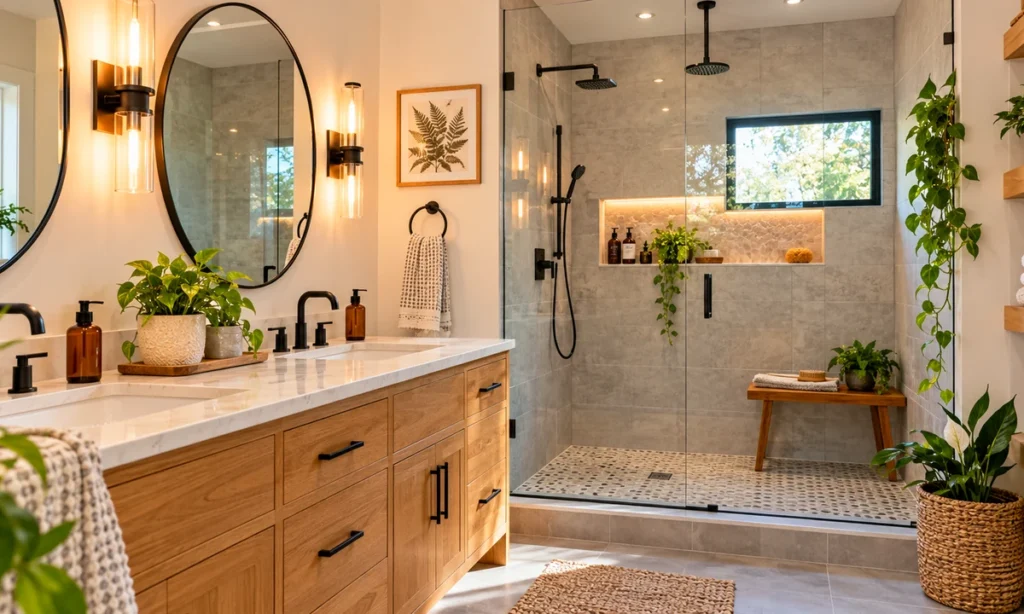
Bathrooms offer another application, but water exposure, cleaning products and edge details require different decisions. Choose surfaces and installation systems intended for the exact location. An attractive slab near a shower must not replace proper waterproofing behind the finish. The finished room should remain easy to clean, adequately ventilated and comfortable for everyday use.
If the remodel also includes open wall storage, see our guide to installing floating shelves safely.
Kitchen countertop alternatives also matter in coordinated bathroom renovations. You can repeat a color family without using identical materials everywhere, especially where moisture, heat or cleaning routines differ.
Consider safety, accessibility and future upkeep
A countertop renovation is a chance to improve working heights, walking routes and task lighting. Avoid sharp projecting corners along major paths. Confirm that an island does not crowd appliance doors or prevent multiple people from moving safely. People planning to remain in a home for years may want to discuss reach ranges and seated work areas before settling on a fixed layout.
Ask how cracks, staining, chips and failed seams would be handled after installation. Keep the product paperwork and installer contact details. A durable choice is not simply the surface that survives a showroom scratch test. It is the one you can maintain, repair and live with over time.
Before choosing kitchen countertop alternatives, think about who uses the room. Rounder edges, uncluttered work zones and surfaces that are straightforward to clean may matter more than achieving a photographed designer look.
Common renovation mistakes
One mistake is ordering from a small sample without seeing the full slab. Another is selecting an impressive countertop before checking the cabinets can support it. A third is assuming all stones with similar colors share the same care requirements. These shortcuts create disputes because expectations were never made specific.
Also avoid scheduling painting, backsplash installation and plumbing reconnection without confirming the counter installation date. Delays can leave the kitchen unusable longer than expected. Finally, do not mistake a popular photograph for a design requirement. A quieter, lower-maintenance material may be a better match for your home.
When evaluating kitchen countertop alternatives, keep the top three requirements visible. If a sample meets only the color requirement but fails on price and care, eliminate it early and focus on practical candidates.
Questions to ask the fabricator
Ask the shop to identify the actual slab or product line on your contract and explain how the edge will look when installed. Request a sketch showing seams and cutouts. Ask which part of the job is done on site, how dust is controlled, and what support is needed beneath overhangs. Confirm whether plumbing and electrical work require other licensed trades.
Get cleaning instructions in writing, along with warranty terms and the process for resolving defects. If a quote seems unusually low, ask what is missing rather than assuming you found the same installation for less money. A clear scope is as valuable as a beautiful material.
Frequently asked questions
Are quartz countertops out of style in 2026?
Some designers are emphasizing natural stone and porcelain, but quartz remains widely used. Style preference alone is not a reason to replace a functional counter.
What is the difference between quartz and quartzite?
Engineered quartz is a manufactured composite. Quartzite is a natural stone formed through metamorphism. Their maintenance and fabrication requirements differ.
Which countertop material needs the least care?
Many porcelain and engineered quartz products are comparatively low maintenance, but no counter is care-free. Check the specific manufacturer instructions.
Is marble a bad choice for a busy kitchen?
Not necessarily. It suits homeowners who accept etching, possible stains and patina. People seeking a pristine surface with minimal attention may prefer another material.
Can I install slab countertops myself?
Full-size stone and porcelain slabs are heavy and can break or cause injury. Use appropriately qualified fabricators and installers, especially for cutouts and silica-containing products.
Should I replace cabinets when replacing countertops?
Not always. A contractor should inspect cabinet condition, level and support capacity before new counters are installed.
The bottom line
The appeal of kitchen countertop alternatives in late 2026 comes from a desire for surfaces that feel individual and fit real homes. Marble, quartzite, granite, soapstone and porcelain each offer advantages, and engineered quartz has not become useless overnight. Compare specific products, inspect full slabs, plan the complete installation and choose the maintenance commitment you can actually sustain.
A good renovation should still feel right after the social-media trend moves on. Put layout, safety, skilled fabrication and daily usefulness ahead of a fashionable label. That approach gives you a kitchen you can enjoy instead of an expensive surface you worry about touching.