
Stress management does not need to begin with a silent retreat or a complicated morning routine. When work, family, money, or health concerns compete for attention, short practical actions may help you respond rather than react. Useful stress management techniques include slower breathing, identifying the next workable step, regular movement, and asking for support. They cannot remove every source of stress, but they can make daily pressures easier to navigate.
Stress is a normal response to challenge. Long-lasting stress, however, can affect sleep, concentration, mood, and physical symptoms. The Centers for Disease Control and Prevention recommends everyday coping habits and professional support when stress becomes difficult to manage. This guide focuses on realistic tools, their limits, and how to choose what fits your situation.
In this guide
- What stress management can and cannot do
- Seven practical stress management techniques
- Match the technique to the situation
- Build a simple five-minute stress management routine
- Common stress management mistakes
- When to seek professional support
- The bottom line
What stress management can and cannot do
The purpose of stress management is not to feel calm every hour. A deadline may still be difficult and a family problem may still need solving. The goal is to recognize your response, protect basic habits, and take action where you have influence.
Notice your early signs. Some people hold tension in their shoulders, rush through meals, or check messages repeatedly. Others become irritable, feel exhausted, or have trouble sleeping. These patterns can signal that it is time for a small change before the day becomes more difficult.
Stress management techniques should never be used to explain away chest pain, fainting, significant breathing problems, or other urgent symptoms. They also do not replace treatment for anxiety disorders, depression, trauma, or other conditions that need assessment and care.
Seven practical stress management techniques
1. Try three minutes of slower breathing
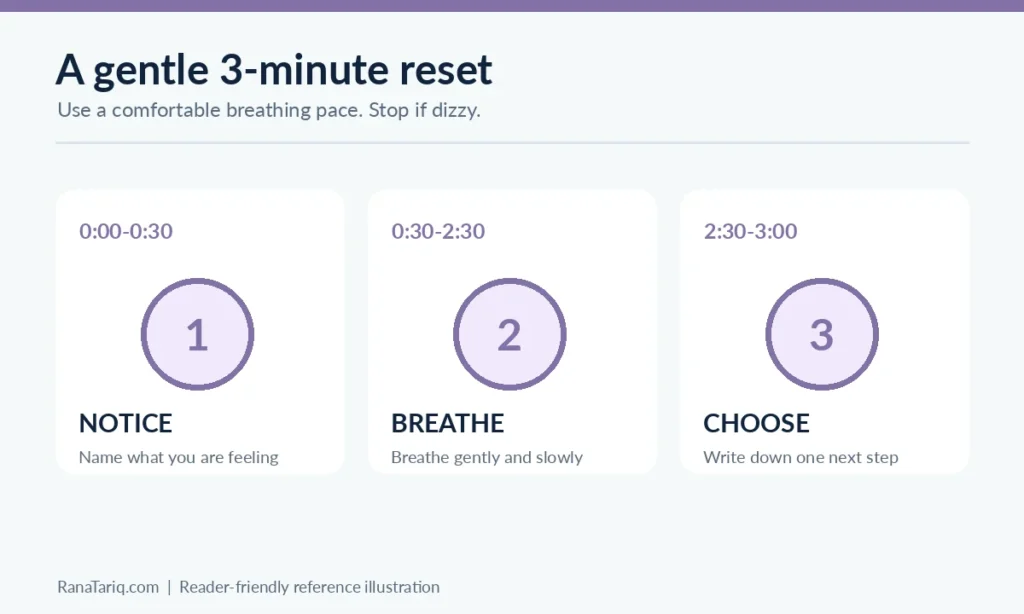
Sit comfortably and let your breathing settle. Inhale gently through your nose, then exhale slowly without forcing air. Continue for two or three minutes at a pace that feels natural. There is no need to hold your breath or chase a precise count. Stop if you feel dizzy or uncomfortable.
The National Center for Complementary and Integrative Health reports that relaxation approaches, including slow breathing, may help with stress symptoms, although research quality and individual responses vary. Think of breathing as a reset, not a cure or a guaranteed way to lower a medical measurement.
2. Name the problem you can actually address
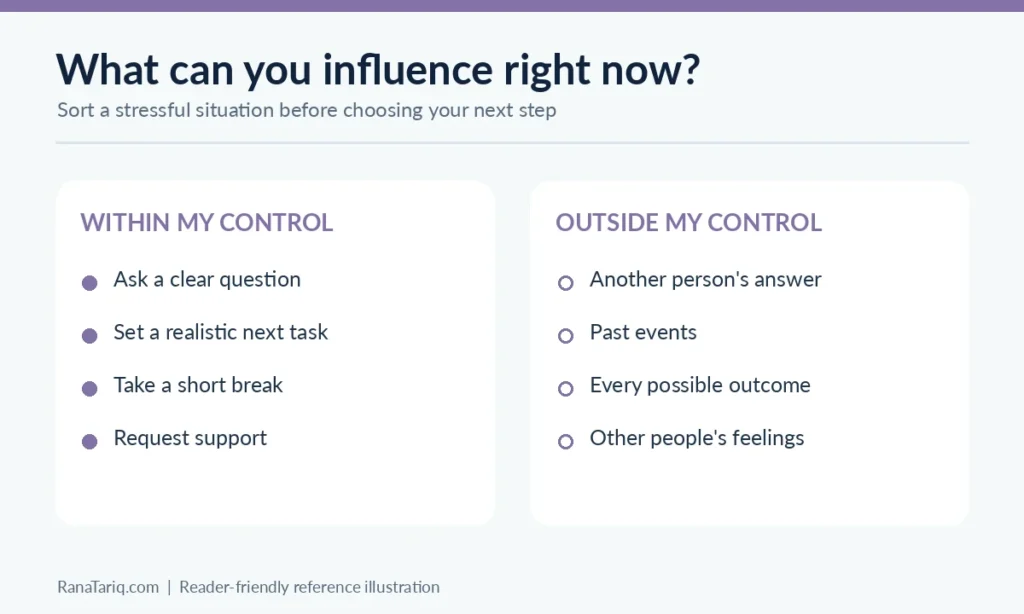
Write one sentence describing what is worrying you. Then make two columns, “within my control” and “outside my control.” You may not control when a client replies, but you can send a clear question, set a reminder, and work on the next task. This approach converts a vague sense of pressure into one realistic action.
When the problem is outside your influence, the action may be to take a break, seek information, or ask for help. Good stress management sometimes means accepting uncertainty rather than finding an instant solution.
3. Move for a few minutes
Walking around the block, stretching gently, or stepping outside can interrupt a long period of sitting and worrying. Choose an activity compatible with your health and physical abilities. Movement supports health in several ways, but it should not become another demanding task on an already crowded list.
If you want a structured movement routine, try our beginner strength training plan after considering your ability and health needs.
4. Reduce unnecessary alerts
A phone notification can pull attention away from work or rest. Consider silencing nonurgent apps for a focused 25-minute period and telling people how to reach you for something important. This does not solve workload problems, but it may reduce the number of interruptions you need to recover from.
5. Keep food and sleep routines predictable
Long gaps without meals, late-night work, and irregular sleep can make a difficult day feel harder. Plan a practical lunch, drink water as needed, and protect a consistent wake time. These habits work alongside stress management techniques rather than replacing specific help for the underlying problem.
When stress affects bedtime, our sleep quality routine offers practical adjustments.
6. Use a brief grounding exercise
Look around and identify a few objects you can see, physical sensations you can feel, and sounds you can hear. Let your attention return to the present space. If grounding makes you feel more distressed, stop and use a different coping approach. People with trauma histories may respond differently to body-focused exercises.
7. Tell someone what kind of help you need
“I’m having a difficult week” is a starting point. Add whether you want advice, a listening ear, or practical help with a task. A trusted friend, family member, manager, or counselor may be able to offer support. Asking early can keep smaller problems from becoming isolated burdens.
Match the technique to the situation
Not every stress management strategy is equally useful in every moment. Select an action by asking whether the pressure comes from an immediate physical reaction, a practical problem, or an ongoing situation that needs support.
| Situation | First step | Follow-up |
|---|---|---|
| Heart racing before a presentation | Gentle breathing and relaxed posture | Practice the opening sentence |
| Too many tasks | Write the next three priorities | Renegotiate a deadline if needed |
| Conflict with a family member | Take a brief pause before responding | Arrange a calmer conversation |
| Constant news alerts | Limit notification windows | Check a reliable source at chosen times |
| Persistent overwhelm | Contact a trusted person | Seek professional assessment |
The table is a decision aid, not a diagnosis. In some situations, stress management means changing the source of the problem. Unsafe work conditions, bullying, financial hardship, and serious caregiving responsibilities may require assistance, advocacy, or practical resources beyond self-care.
Build a simple five-minute stress management routine
Try a small routine at a predictable time, such as after finishing lunch. Spend one minute noticing how you feel, two minutes breathing gently, one minute writing the most important next task, and one minute deciding whom or what you need for support. You can shorten it if five minutes is unrealistic.
Measure the routine by usefulness rather than perfect relaxation. Did it help you identify a next step? Did you pause before sending an angry reply? Did you notice a problem that deserves support? These outcomes matter more than keeping a streak in an app.
If a technique feels unhelpful after several attempts, try another. Some people prefer walking or talking over meditation. Stress management should be adaptable to your needs, personality, and environment.
Common stress management mistakes
Trying to eliminate all stress. Difficult emotions are part of life. A more realistic aim is to respond effectively and recover when possible.
Turning relaxation into a performance test. If you become frustrated because your mind wanders, the method may add pressure. Shorter sessions or a movement-based technique may suit you better.
Using distractions to avoid every problem. Entertainment can provide a break, but an overdue bill or unsafe situation still needs appropriate action. Pair relief with a workable next step.
Relying on supplements without evidence. Products marketed for calm can interact with medication and may not provide the benefits claimed. Ask a qualified professional about supplements or treatment options.
Waiting too long to ask for help. Persistent distress, disrupted functioning, and worsening symptoms deserve attention. Stress management tools are not a substitute for mental healthcare.
When to seek professional support
Talk with a healthcare professional or licensed mental health provider when anxiety, sadness, irritability, or sleep problems persist or interfere with work, relationships, or everyday activities. They can help assess whether stress is part of a treatable condition and discuss therapy or other support.
If you or someone else is in immediate danger, use local emergency services. In the United States, people experiencing a mental health crisis can call or text 988 for the Suicide & Crisis Lifeline. For ongoing stress, the CDC’s coping guidance offers additional support options.
Frequently asked questions
What is the fastest stress management technique?
A brief breathing pause or a short walk may help you reset in the moment. Neither is guaranteed to work for everyone, and neither solves the cause of ongoing stress by itself.
Can breathing exercises stop anxiety?
Breathing may relieve some symptoms, but it does not reliably stop an anxiety disorder. Seek clinical support for persistent or severe anxiety and stop any exercise that causes discomfort.
How many minutes should I practice each day?
Start with a manageable amount, even two or three minutes. Consistency and a technique that suits you are more important than meeting an arbitrary time requirement.
Is mindfulness better than exercise for stress?
There is no universal winner. Both may help, and your preferences, physical abilities, and circumstances matter. You can use either or combine them.
What if stress is caused by problems I cannot control?
Focus on what is still possible: asking for assistance, protecting basic routines, finding trustworthy information, and seeking professional or community resources. Not every problem can be solved by an individual coping technique.
The bottom line
Useful stress management is practical, flexible, and honest about its limits. Try one small technique this week and pair it with a specific action on the problem in front of you. If pressure keeps affecting daily life, reach out for support instead of expecting a self-help routine to do everything.