
Healthy meal planning works best when it reduces decisions instead of adding rules. A useful weekly plan starts with foods you already have, a few meals you enjoy, and a grocery list that fits your schedule and budget. You do not need perfect recipes, strict calorie targets, or seven different dinners. This guide shows how to build balanced meals, prepare food safely, and make a flexible seven-day menu without wasting groceries.
The USDA’s MyPlate meal-planning guide recommends checking what is already in the kitchen, considering all major food groups, planning for busy days, and using leftovers carefully. Individual needs differ, particularly with medical conditions, allergies, pregnancy, or special diets. Use this framework as everyday education rather than a personalized nutrition prescription.
In this guide
- What healthy meal planning should accomplish
- Build a simple plate before choosing recipes
- Six steps for healthy meal planning on a real budget
- A flexible seven-day healthy meal planning example
- How to keep meal prep safe and practical
- Common healthy meal planning mistakes
- Adjust the plan without starting over
- The bottom line
What healthy meal planning should accomplish
The point of healthy meal planning is to make the next reasonable choice easy. If lunch is already prepared or its ingredients are available, you are less likely to rely on whatever happens to be nearby. Planning also lets you use perishable items before they spoil and buy groceries with a purpose.
A balanced eating pattern includes a variety of vegetables, fruit, grains, protein foods, and dairy or fortified soy alternatives when appropriate. There is room for convenience foods and familiar favorites. A plan that is too restrictive, expensive, or time-consuming usually does not last long.
Think about your regular week. Are Tuesdays busy? Does your household prefer leftovers? Do you eat lunch at home or carry it to work? Those questions are more useful than copying a meal plan written for someone else’s life.
Build a simple plate before choosing recipes
You can use a plate as a visual guide without measuring every bite. Include a generous portion of vegetables or fruit, a source of protein, and a grain or other carbohydrate food. Depending on your needs, add yogurt, milk, fortified soy alternatives, healthy fats, or another food that rounds out the meal.
Food choices are one part of our wider guide to healthy aging habits that support daily functioning.
| Building block | Everyday options | Budget-friendly ideas |
|---|---|---|
| Vegetables and fruit | Broccoli, carrots, greens, apples, berries | Frozen vegetables, seasonal fruit |
| Protein foods | Eggs, fish, tofu, chicken, beans, lentils | Dried beans, canned tuna, eggs |
| Grains and starches | Brown rice, oats, whole-wheat bread, potatoes | Oats, rice, potatoes |
| Dairy or alternatives | Plain yogurt, milk, fortified soy drink | Large plain yogurt tub, store brands |
| Flavor | Herbs, spices, lemon, olive oil | Dried seasonings, vinegar |
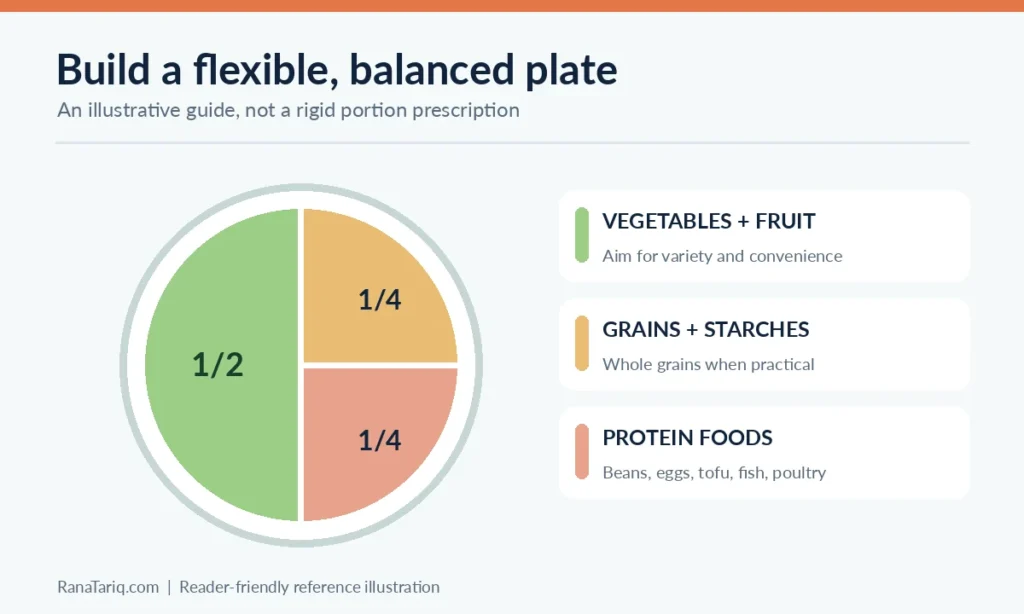
Healthy meal planning is about patterns across the day and week, not meeting a precise plate ratio at every meal. People with diabetes, kidney disease, food allergies, swallowing issues, or other conditions may need a different balance. A registered dietitian can help tailor a plan.
Six steps for healthy meal planning on a real budget
Step 1. Shop your refrigerator first
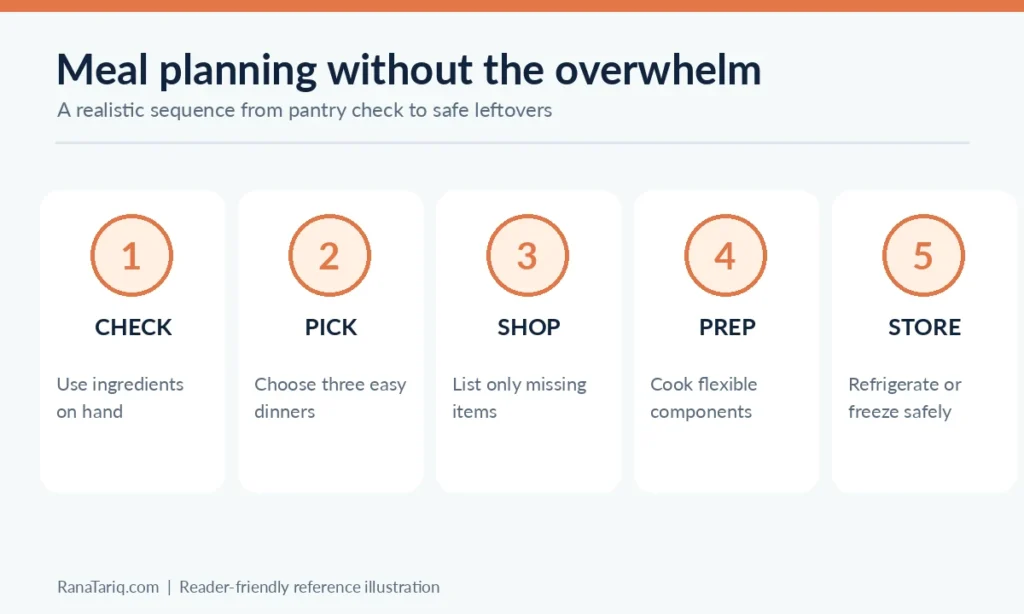
List fresh foods that need to be used soon, along with freezer and pantry staples. If you already have spinach, eggs, rice, and frozen vegetables, those foods can anchor several meals. This is a faster route to a sensible plan than starting from a blank page of complicated recipes.
Step 2. Pick three reliable dinners
Choose meals you can cook without much thought. For example, bean and vegetable chili, chicken or tofu rice bowls, and a baked potato with vegetables and protein. Repeating a dinner or using its leftovers is efficient, not a failure of creativity.
Step 3. Decide what breakfast and lunch will look like
Breakfast might rotate between oatmeal with fruit and eggs with whole-grain toast. Lunch could be last night’s dinner, a sandwich with vegetables, or a grain bowl. Give yourself one or two options per meal rather than seven separate recipes.
Step 4. Plan for your hardest day
If Wednesday includes a late meeting or children’s activities, assign a meal that needs almost no cooking. Frozen vegetables with reheated beans and rice may be more realistic than a new recipe that takes an hour.
Step 5. Make a grouped shopping list
Sort your list by produce, protein foods, grains, dairy or alternatives, and pantry items. Cross off anything already at home. A grouped list makes healthy meal planning faster and can reduce impulse purchases, although actual savings depend on local prices and shopping habits.
Step 6. Prepare components, not an entire week of identical meals
Wash ready-to-eat produce appropriately, cook a grain, prepare a pot of beans or another protein, and portion food for short-term use. Keep sauces separate when possible. That gives you the flexibility to combine ingredients into different meals.
A flexible seven-day healthy meal planning example
This is an illustrative menu for adults without special dietary restrictions. Portions and snacks should depend on appetite, activity, health needs, and household preferences. Substitute foods for allergies, preferences, or affordability.
| Day | Breakfast | Lunch | Dinner |
|---|---|---|---|
| Monday | Oatmeal, fruit, and nuts | Hummus and vegetable sandwich | Bean and vegetable chili with rice |
| Tuesday | Eggs and whole-grain toast | Leftover chili | Chicken or tofu bowl with vegetables |
| Wednesday | Plain yogurt, berries, and oats | Leftover rice bowl | Baked potato with beans and greens |
| Thursday | Oatmeal with banana | Tuna or chickpea salad wrap | Vegetable pasta with protein of choice |
| Friday | Eggs with fruit | Leftover pasta and vegetables | Fish or tofu with roasted vegetables |
| Saturday | Yogurt or fortified alternative with fruit | Soup and whole-grain toast | Homemade pita pizzas with a side salad |
| Sunday | Peanut butter toast and fruit | Mixed grain-and-bean bowl | Flexible family meal and ingredient prep |
– Exact placement: Immediately after the seven-day sample menu table
Use leftovers promptly or freeze them in suitable containers. Avoid assuming that food cooked on Sunday will remain safe until Friday in the refrigerator. The CDC advises using refrigerated leftovers within three to four days, and cooked foods should be cooled and refrigerated promptly. Follow specific food safety instructions for raw meats, eggs, and other higher-risk ingredients.
How to keep meal prep safe and practical
A meal plan should not create food safety problems. Wash hands and preparation surfaces, keep raw meat separate from foods eaten without further cooking, cook foods to safe temperatures, and refrigerate perishables promptly. Store prepared meals in shallow, sealed containers so they cool more efficiently.
Label containers with the date. If you cook extra food for later in the week, freeze portions rather than leaving them in the refrigerator too long. Thaw and reheat food safely, and discard anything you suspect was stored improperly. Smell alone cannot confirm that food is safe.
Common healthy meal planning mistakes
Buying food for an imaginary schedule. Planning six elaborate dinners rarely works if you usually arrive home late. Keep two or three dependable options and use leftovers.
Making vegetables an afterthought. Add a frozen vegetable, bagged salad, or fruit option to the shopping list before planning snacks and extras. Convenience can make nutritious choices easier.
Treating every meal as a nutrition test. One restaurant dinner or an imperfect lunch does not cancel a useful eating pattern. Look at habits over time.
Forgetting food safety. A large batch can be convenient only if it is stored and consumed properly. Freeze later portions and date containers.
Ignoring personal needs. General meal templates cannot replace medical nutrition therapy, and restrictive plans can be harmful for some people. Seek individualized guidance when needed.
Adjust the plan without starting over
The biggest advantage of healthy meal planning is flexibility. Smart meal planning also leaves room for unexpected visitors and last-minute schedule changes. Useful meal planning is an adaptable household routine, not a fixed menu. Keep a short list of substitutions: beans for meat in a rice bowl, frozen broccoli for fresh greens, or oats instead of a more expensive breakfast cereal. If your plans change, move an ingredient to the freezer or use it in soup.
After the first week, ask what you actually ate. Which foods went unused? Which dinner felt effortless? Which day needed more convenience? Adjust the following week’s list based on those answers. Your real habits are more informative than an idealized plan.
If you are pairing meals with exercise, see our strength training at home beginner plan.
Frequently asked questions
Do I need to meal prep all seven days at once?
No. Planning and prepping are different. You can sketch the week’s meals on Sunday and cook fresh meals or prepare components in smaller batches as needed.
Is healthy meal planning expensive?
It does not have to be. Frozen vegetables, beans, oats, rice, eggs, and seasonal produce may be economical choices, though prices vary by location. A shopping list also helps limit waste.
Can I repeat the same breakfast daily?
Yes, if it suits your needs and your overall eating pattern includes enough variety and nutrients. Add or change foods when needed rather than forcing novelty for its own sake.
What is the safest way to use leftovers?
Refrigerate promptly, keep them in suitable containers, and generally eat refrigerated leftovers within three to four days or freeze them. Follow appropriate cooking and reheating guidance.
Do I need a calorie-counting app?
Most people can start planning balanced meals without one. People managing specific medical needs may benefit from individualized support rather than guessing at calorie or nutrient targets.
The bottom line
Healthy meal planning should save decisions, support varied eating, and fit your real week. Start with your pantry, choose three reliable dinners, plan for busy days, and store leftovers safely. After one week, keep what worked and change what did not.