
Healthy aging is less about chasing a particular birthday and more about keeping the abilities that make life enjoyable. Walking comfortably, carrying shopping bags, remembering appointments, and spending time with people all matter. Although genes and circumstances influence how we age, daily choices can support physical function, mental well-being, and quality of life. These ten healthy aging habits focus on actions you can begin without expensive products or promises of a longer lifespan.
According to the National Institutes of Health’s healthy aging overview, movement, nutritious food, sleep, social ties, preventive care, and chronic-condition management are all relevant. None guarantees that disease will be prevented. Their value comes from supporting health in ways that fit real lives.
In this guide
- What healthy aging actually means
- 10 healthy aging habits worth making room for
- A realistic weekly healthy aging routine
- Habits that deserve skepticism
- When to discuss changes with a healthcare professional
- The bottom line
What healthy aging actually means
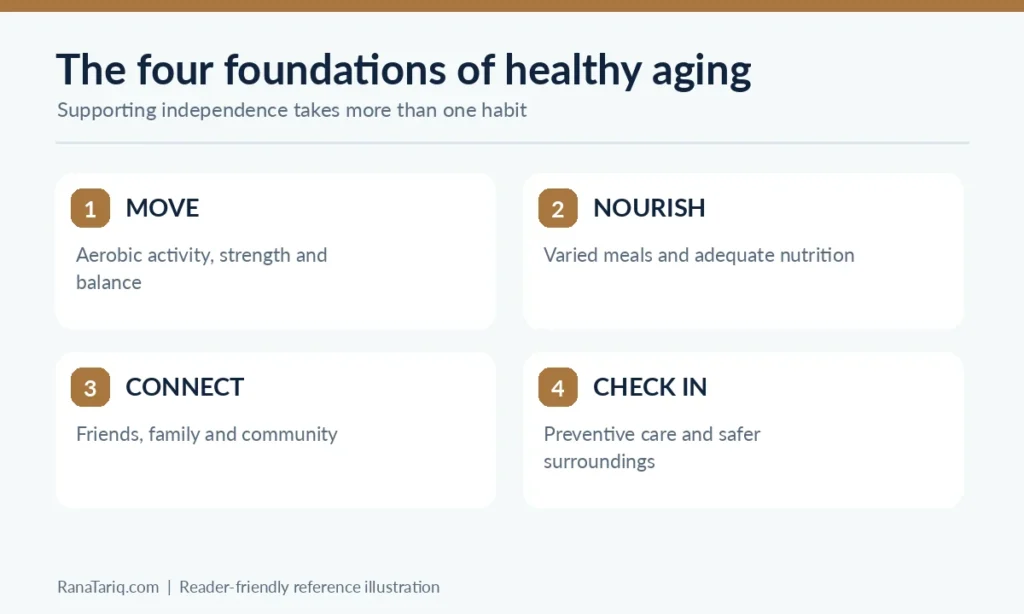
A person can have a chronic condition and still work toward healthy aging. The aim is to protect independence, adapt to changing needs, and address problems before they create larger setbacks. That might mean adjusting an exercise so it is safe, getting hearing checked, or making the home easier to move through.
The idea of a single anti-aging secret is attractive because it sounds simple. In practice, healthy aging is a collection of habits, surroundings, relationships, and access to care. You do not need to make ten changes at once. Select one or two that solve a real problem in your day.
10 healthy aging habits worth making room for
1. Keep walking and moving during the day
Movement supports the heart, muscles, mood, and everyday function. Walking is convenient, but gardening, dancing, cycling, and other activities can count. Start with a duration you can manage. Someone who is mostly sedentary may find that five or ten minutes after lunch is a useful first step.
The CDC’s activity guidance for older adults recommends at least 150 minutes of moderate aerobic activity a week, or an appropriate equivalent, while recognizing that some people need to work toward this goal gradually. If you cannot meet the target, some movement is generally better than none.
2. Train strength, not just stamina
Age-related muscle loss can make stairs, chairs, and carrying objects more difficult. Include appropriate strengthening activity on at least two days each week, with exercises such as supported sit-to-stands or resistance-band movements. A physical therapist or qualified exercise professional can help adapt movements to pain, disability, or recovery needs.
Train strength, not just stamina | A practical starting point is our strength training at home for beginners guide.
3. Practice balance in safe conditions
Balance matters because falls can change a person’s ability to live independently. Holding a sturdy counter while practicing controlled weight shifts may be a simple starting point, but balance exercises should match your fall risk. The CDC’s fall-prevention advice also recommends discussing medication side effects, vision, and bone health with a clinician.
– Exact placement: Immediately after habit 3 Practice balance in safe conditions
4. Eat enough varied, nourishing food
Healthy aging is not a reason to follow a restrictive diet. Build meals with vegetables or fruit, protein foods, whole grains, and other foods that match personal needs. Appetite, dental problems, medicines, income, and access to groceries can all affect nutrition. If you are losing weight without trying or struggle to eat, ask for a medical or dietitian assessment.
5. Protect regular, restorative sleep
A stable sleep schedule supports alertness and daily function. Older adults often experience changes in sleep timing, but persistent exhaustion or disrupted sleep should not be dismissed as an inevitable part of age. Review medicines, pain, snoring, and nighttime bathroom trips with a clinician when sleep becomes a problem.
6. Maintain social contact on purpose
A weekly call, shared walk, class, or volunteer shift can help reduce isolation and keep ordinary routines meaningful. The NIH Social Wellness Toolkit describes how relationships and social support contribute to health. Choose connections that feel supportive, not obligations that drain you.
7. Keep preventive visits and screenings on schedule
Blood pressure checks, vaccines, dental care, vision visits, and age-appropriate screening can identify problems that are easier to manage early. Recommendations vary with health history and personal risk. Discuss what is appropriate with your healthcare team rather than using a generic checklist as medical advice.
8. Review medicines and supplements
Some medicines may contribute to dizziness, daytime sleepiness, or interactions. Take a current list of prescriptions, over-the-counter products, and supplements to appointments. Do not stop prescribed treatment on your own. For healthy aging, avoiding unnecessary risks is often as important as adding another wellness habit.
9. Make the home easier to navigate
Improve lighting near stairs, clear walking paths, and keep frequently used items within easy reach. Secure loose rugs and address slippery bathroom floors. These changes do not prevent every fall, but they remove common hazards and make daily life less demanding.
10. Keep learning and find activities you enjoy
Reading, hobbies, community classes, music, and volunteering can bring challenge and purpose to everyday life. Learning something new can be enjoyable without needing to claim it prevents dementia. Choose activities that hold your interest, and adapt them when vision, hearing, or mobility changes.
A realistic weekly healthy aging routine
The most workable healthy aging plan is specific. A vague promise to “be healthier” leaves too many decisions for later. The example below joins movement, meals, relationships, and home safety without turning every day into a project.
| Day | One practical action | Why it belongs |
|---|---|---|
| Monday | Comfortable walk and brief strength session | Supports movement and muscle function |
| Tuesday | Call a friend or join a group | Builds regular social contact |
| Wednesday | Prepare a balanced meal and review groceries | Makes nourishing food easier to access |
| Thursday | Strength and suitable balance practice | Supports everyday movements |
| Friday | Review appointments or medication list | Keeps preventive care organized |
| Saturday | Enjoy a hobby or time outdoors | Supports interest and activity |
| Sunday | Check lighting, clear clutter, and plan next week | Reduces avoidable home obstacles |
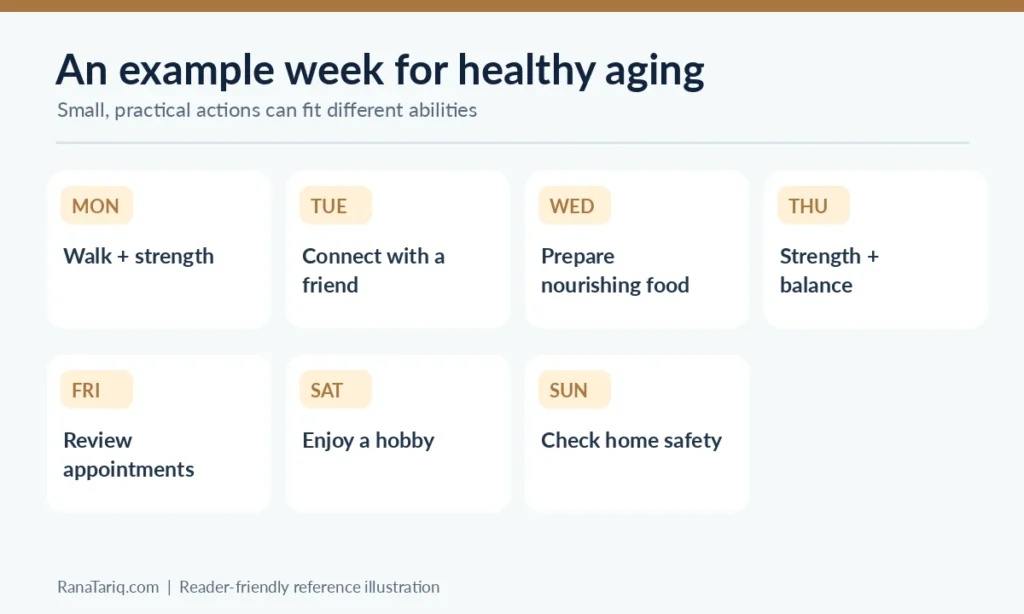
This schedule is an example, not a treatment plan. Someone living with arthritis, heart disease, cognitive changes, or disability may need different activities. Many healthy aging habits can still work when adapted to seated exercise, short outings, or support from family and community services.
Habits that deserve skepticism
Be cautious about products that promise to “reverse aging,” add a precise number of years to life, or replace medical care. A supplement with a convincing label is not automatically effective or safe. Likewise, a viral routine may not be suitable for someone with balance problems or a chronic condition.
Another mistake is focusing only on a step count. Steps can be useful for some people, but they do not measure muscle strength, nutrition, social connection, or pain. Healthy aging requires a broader view of what you can comfortably do and what support you need.
Do not wait for the perfect routine. If today allows only a short walk, a phone call, and preparing tomorrow’s breakfast, those are still meaningful actions. Sustainable changes are easier to repeat than demanding challenges.
When to discuss changes with a healthcare professional
Seek medical advice for new falls, unexplained weight loss, worsening memory problems, new weakness, persistent low mood, major sleep disruption, or sudden changes in daily function. New symptoms should not be written off as normal aging. If you are planning to increase exercise after illness or with significant health conditions, ask what level is safe for you.
A useful appointment question is, “Which change would most improve my ability to do everyday activities?” This can help prioritize physical therapy, nutrition support, medication review, or other appropriate care instead of trying everything at once.
Frequently asked questions
When should I start healthy aging habits?
You can begin at any adult age. Earlier changes may establish useful routines, but later changes can still improve activity, comfort, and day-to-day function.
Do I need 10,000 steps a day?
No universal step target fits every person. Choose movement that suits your abilities, and discuss safe progression if you have mobility limits or symptoms.
Can supplements replace a healthy diet?
No supplement provides all the advantages of varied food and appropriate healthcare. Some people need specific supplements for diagnosed deficiencies, but decisions should reflect individual needs and possible interactions.
What if I have a chronic disease?
Chronic conditions do not rule out healthy aging. Exercise, food choices, and daily routines may need adaptations from your medical team or rehabilitation professional.
Which habit should I change first?
Start with the obstacle that affects your independence most. For one person it is weak legs, for another it is poor sleep or isolation. A small, repeatable step is usually better than a complicated plan.
The bottom line
Healthy aging is not a guarantee of living longer, and it is not a competition to look younger. It is the continuing work of protecting physical ability, staying connected, eating and sleeping well, and getting appropriate care. Pick two of these habits to practice this week, then adjust as your needs change.